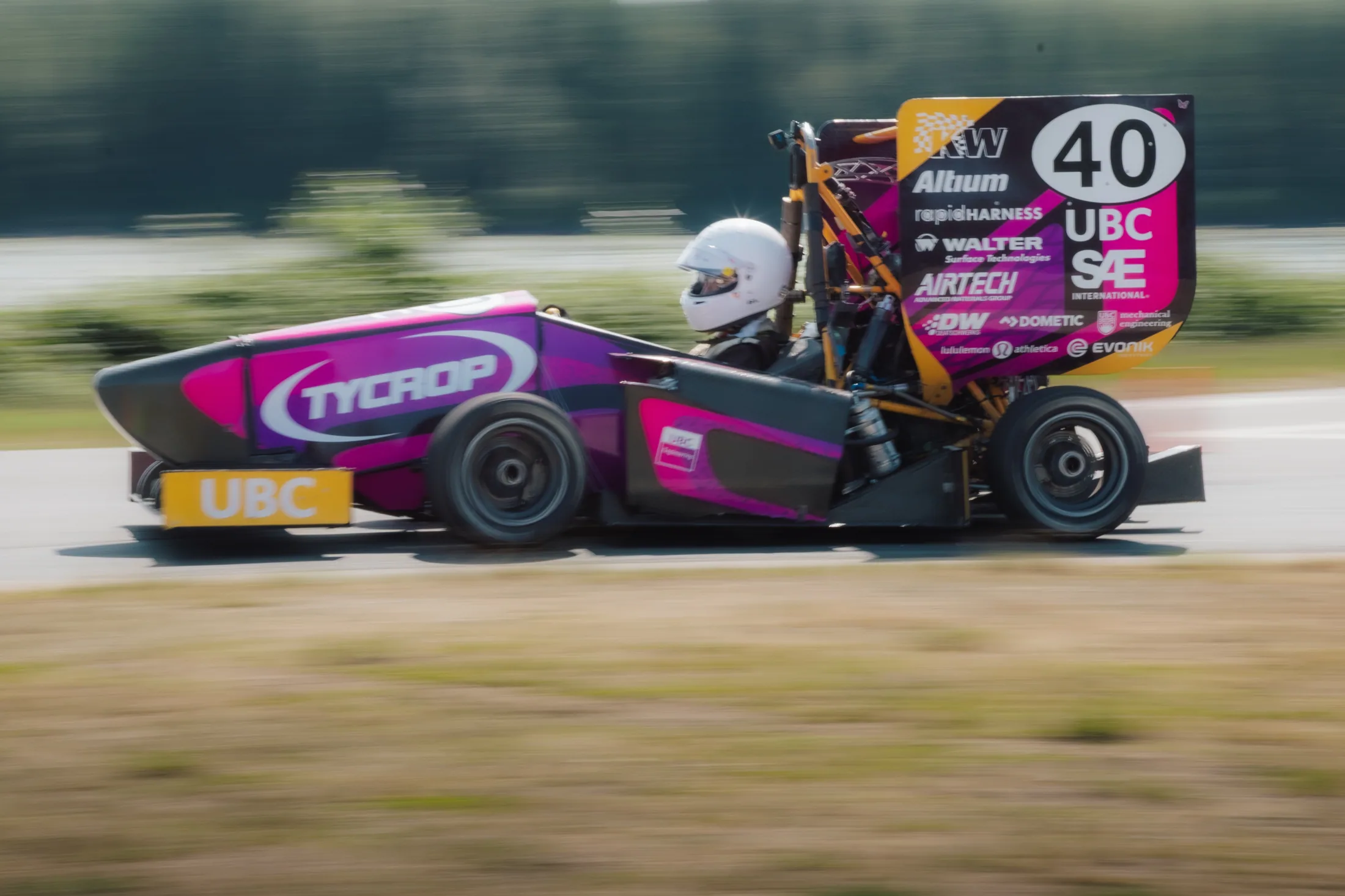

Blade-style anti-roll bars
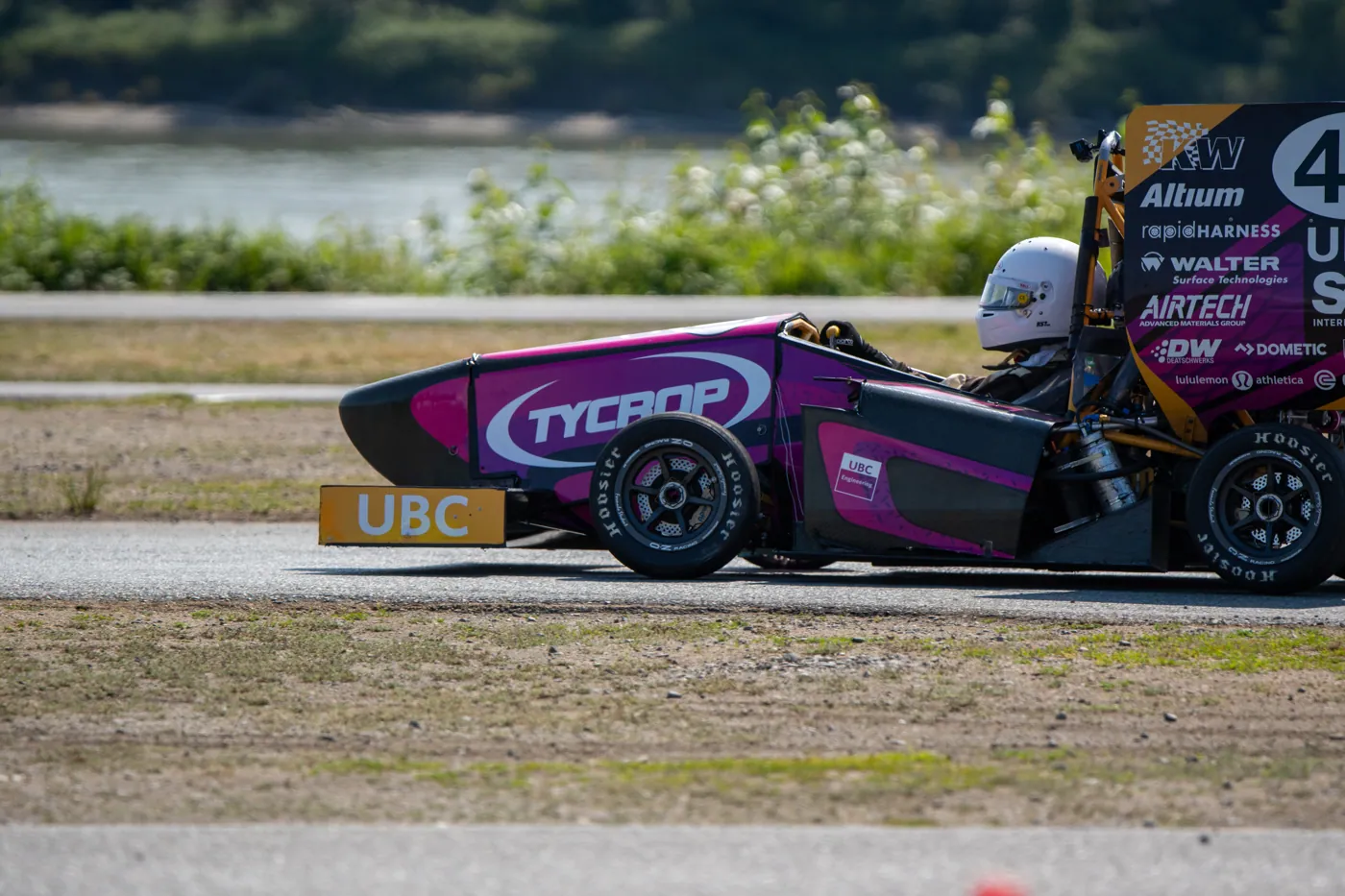
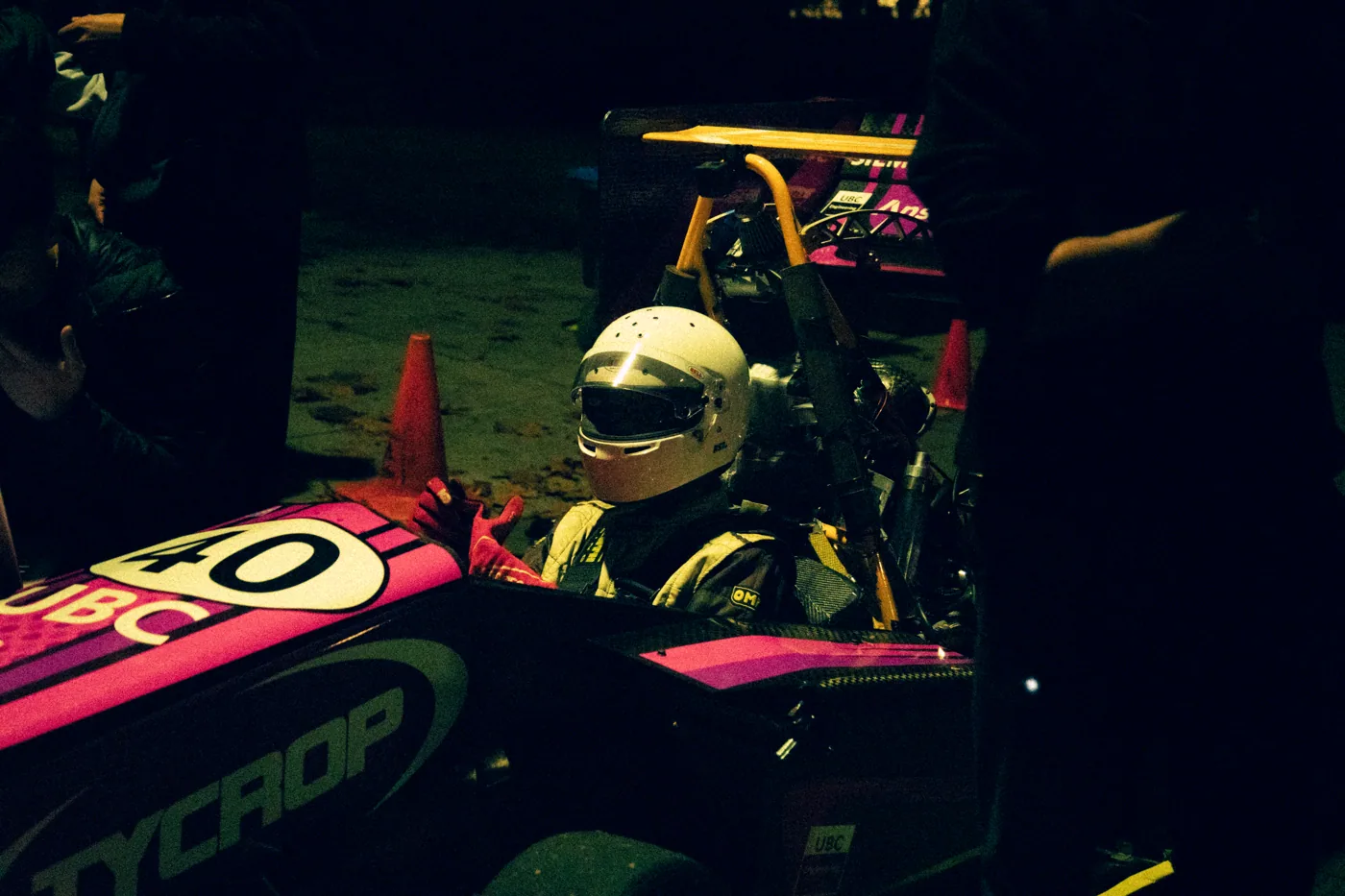
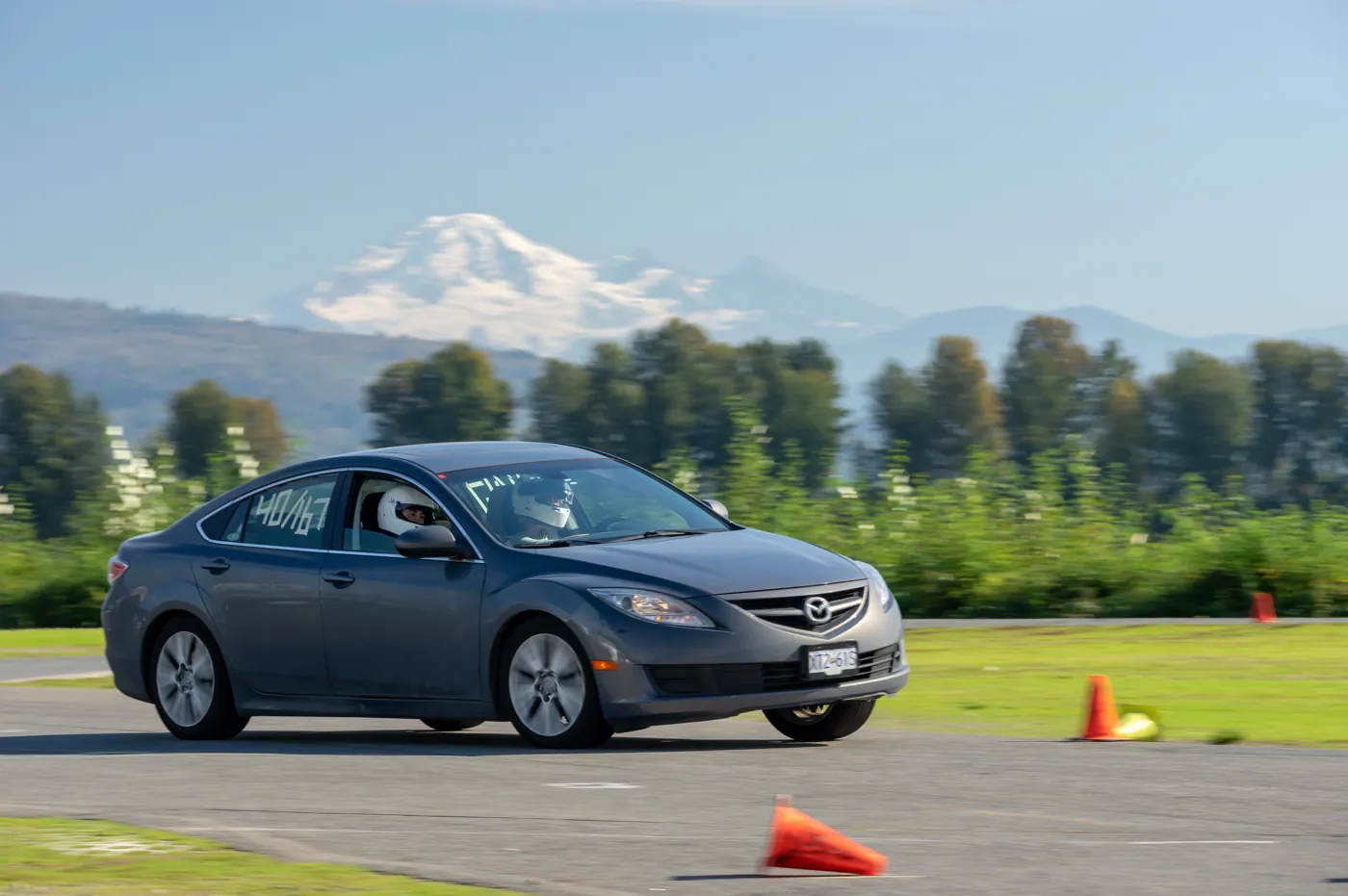
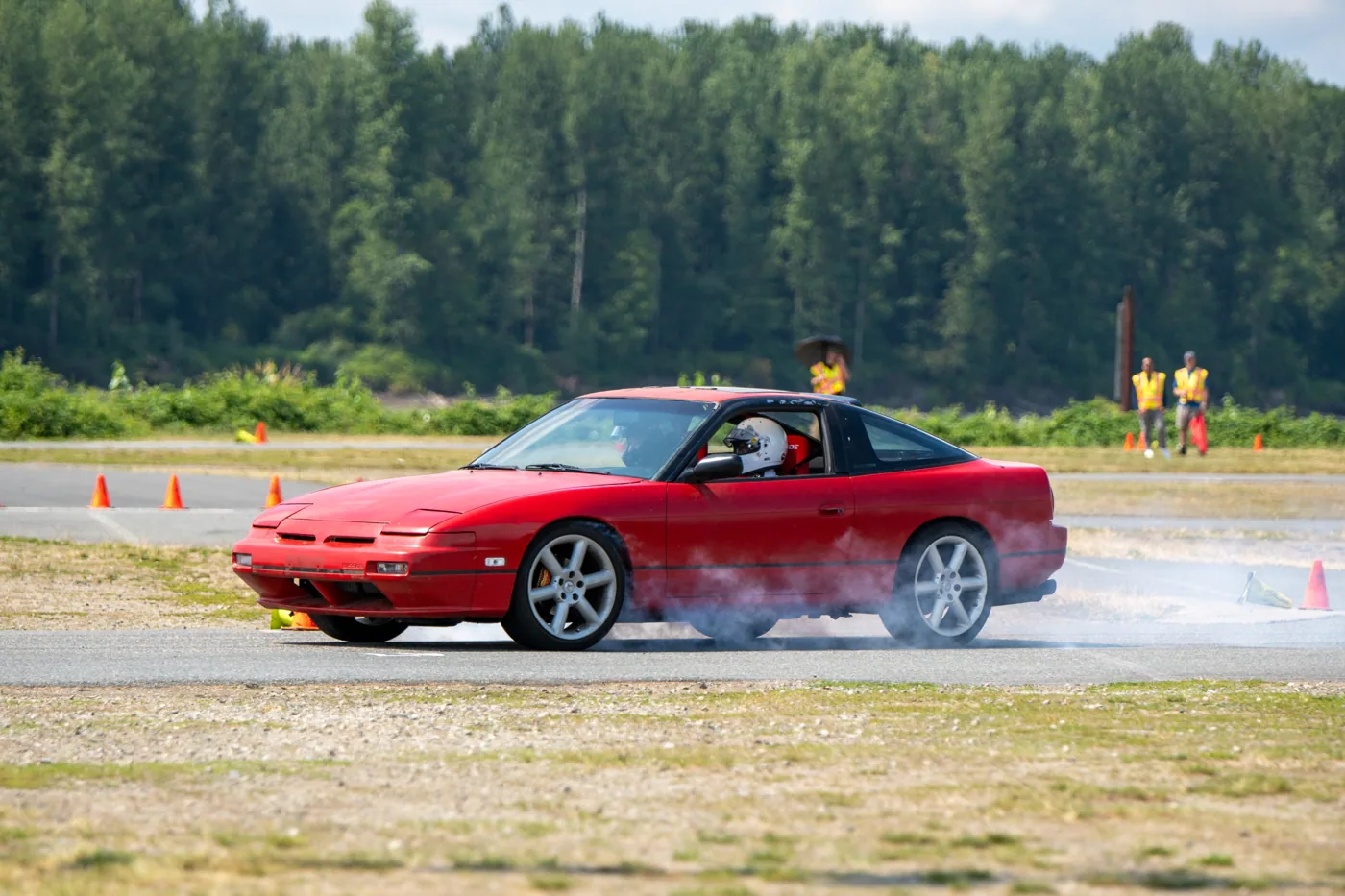
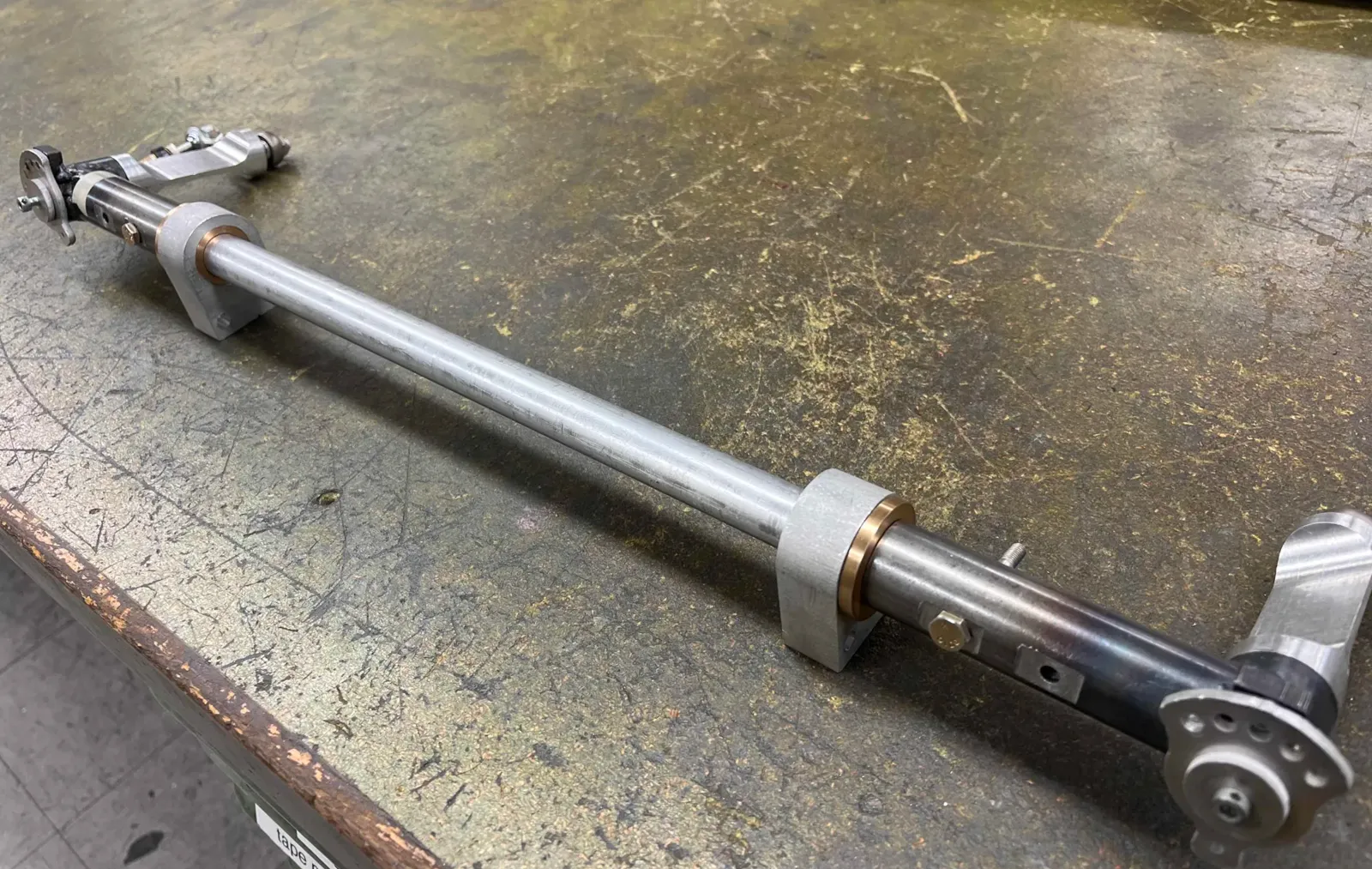
The anti-roll bars set how much the car rolls in a corner, which shifts it toward understeer or oversteer. I designed, sized and machined adjustable front and rear bars that the team can retune at the track in under 20 seconds.
The problem
Handling balance changes with track, weather and driver, so the team needs to adjust roll stiffness quickly between runs. The bars also have to fit in a crowded suspension package and survive the loads from the car rolling.
Design
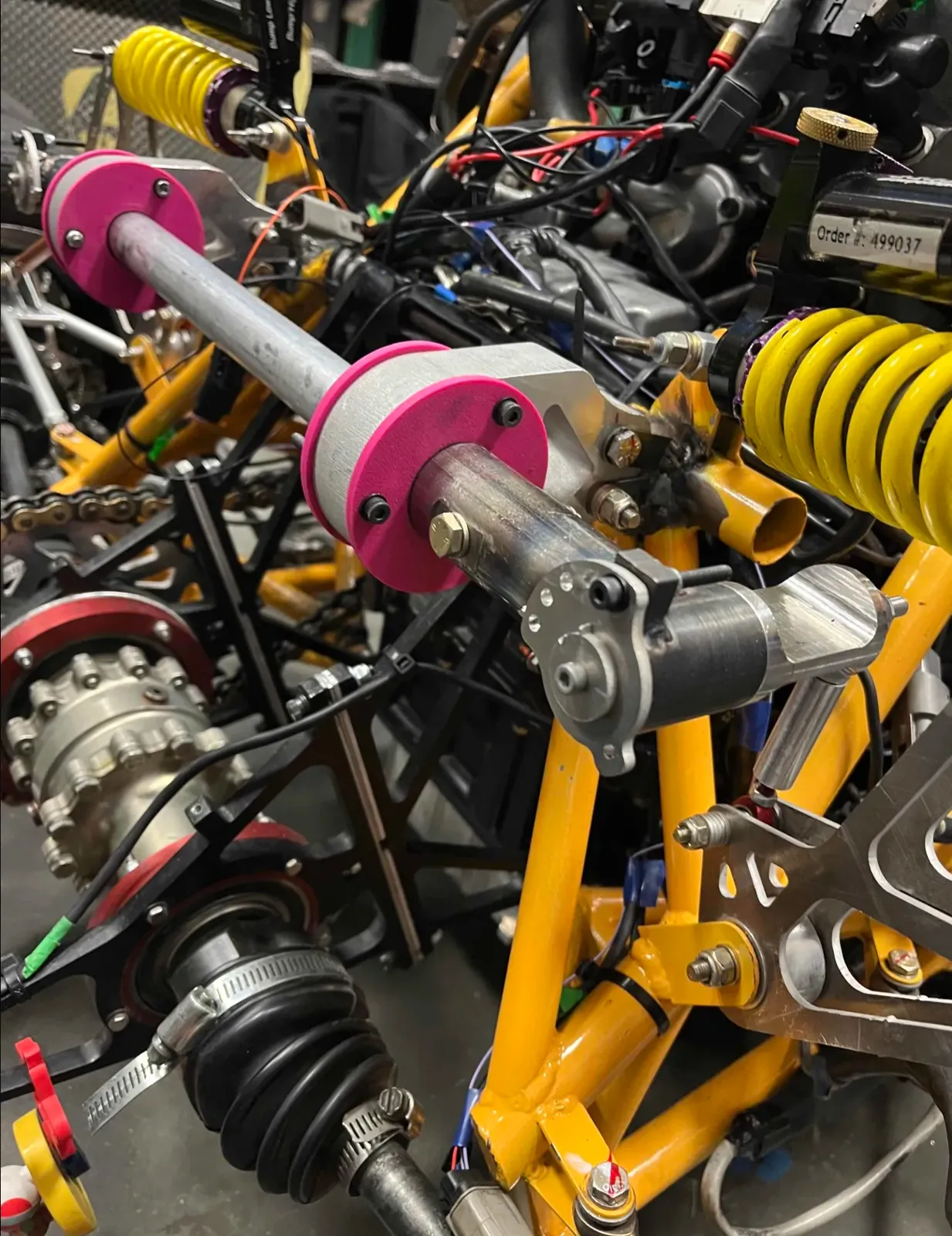
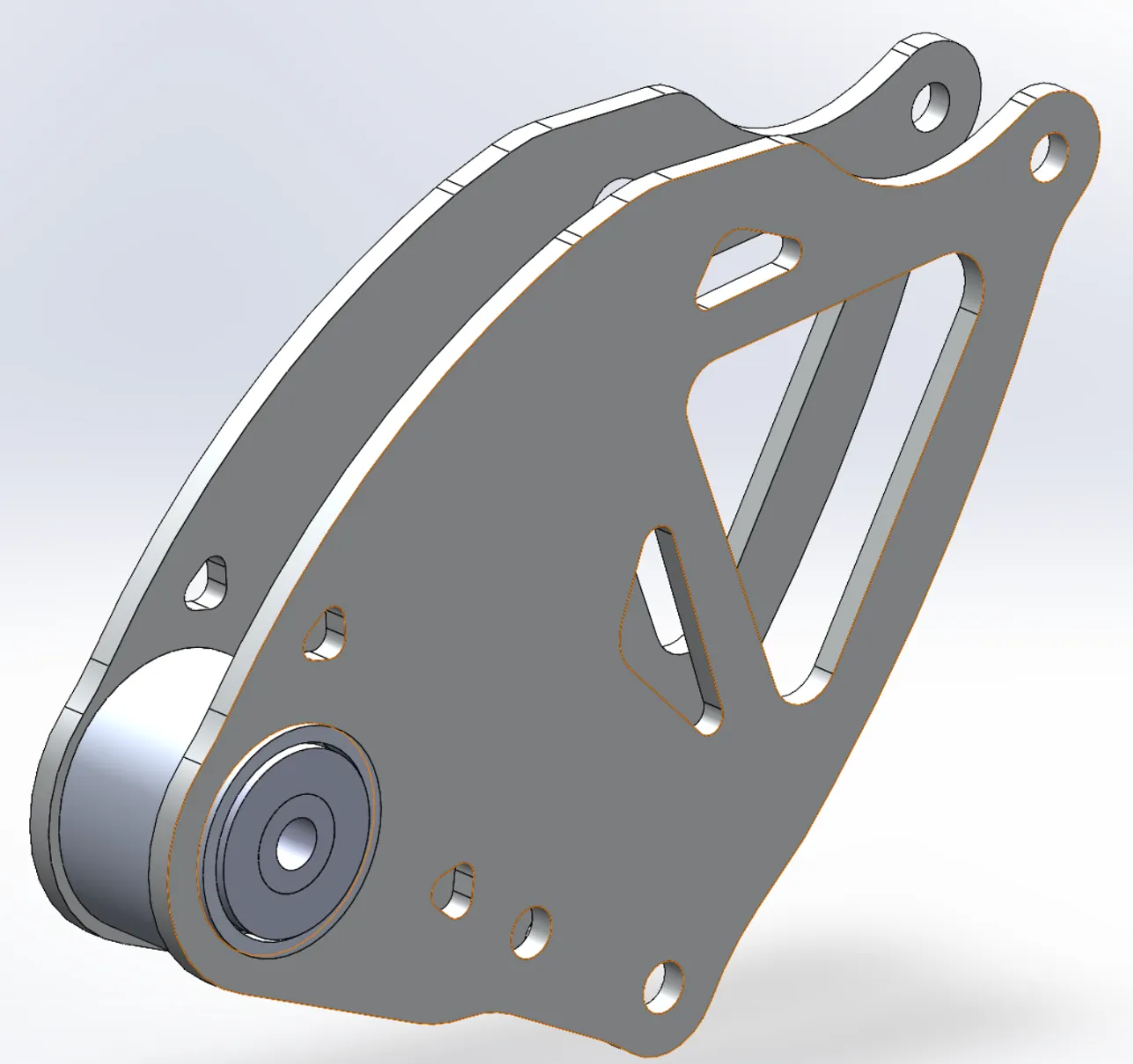
Each bar is a torsion bar with a "blade" at the end. The blade is loaded in bending, and twisting it with the clocking plate changes how much force it takes to bend it the same distance. That changes the roll stiffness without swapping any parts. Adjustment holes set the angle, and a bolt with a safety-wire hole locks it.
Analysis
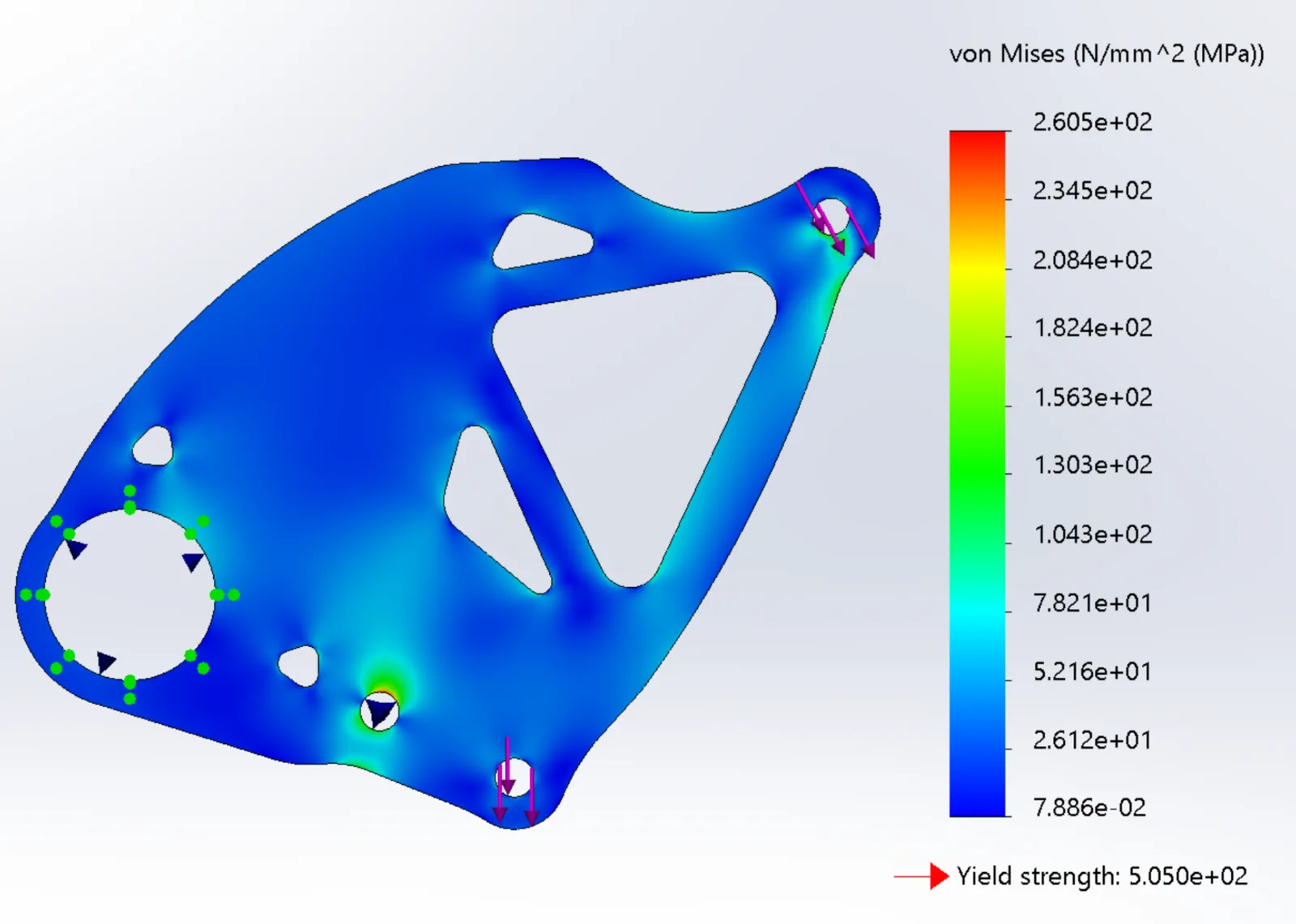
I set the bar length from a multi-body vehicle model in MATLAB Simulink, then iterated material, inner diameter and outer diameter in a sizing spreadsheet. The spreadsheet calculates the strain energy in the bar at its stiff and soft settings and compares it to the energy from the car rolling, so the bar won't fail. It also gives the motion ratio needed to hit the target roll stiffness. I then checked every part in SOLIDWORKS FEA to a minimum factor of safety of 2.
Manufacturing
I machined the blades, bar ends, sleeves and droplinks myself on the lathe, mill and rotary table, holding tolerances to 0.0005 in.
Testing and results
- Bench-tested the manufactured bars to validate the design.
- Roll stiffness can be changed trackside in under 20 seconds.
- The optimized geometry improved the car's predicted handling balance in simulation.